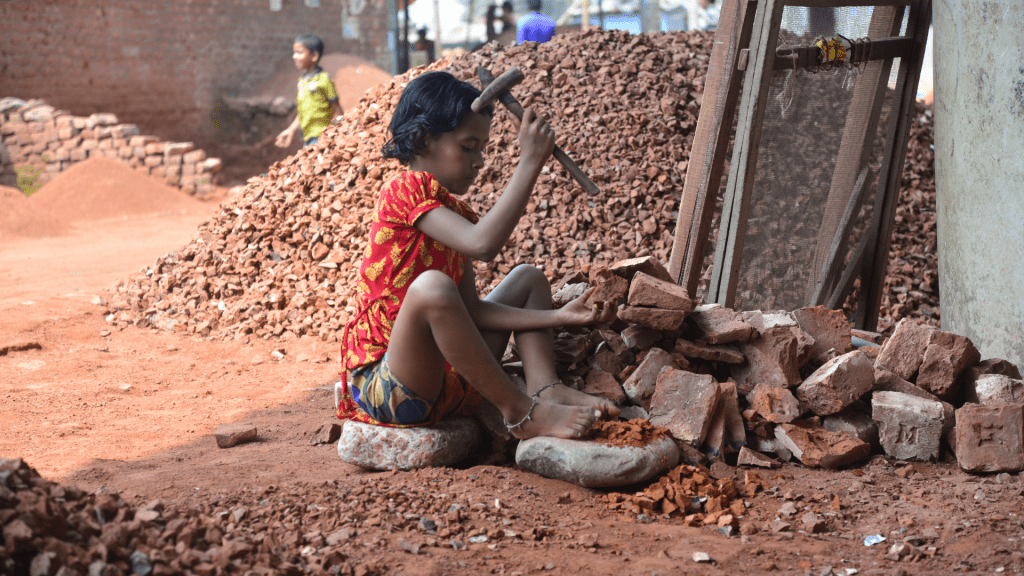
According to the U.S. Department of Labor (DOL)1, 2018, “Children in Eritrea engage in the worst forms of child labor, including in forced military training associated with national service and forced agricultural labor.” Despite recent U.S. intervention and reforms, Eritrea remains one of the world’s poorest countries, and a leading nation in the brutal world of child labor. New developments in the agricultural industry is what drives the constant need for a young, working labor force in the country, and with profit riding on the workers, safety is often a secondary concern. This relentless child labor more often than not, hinders children’s access to safe and reliable health care; new developments in agriculture are often viewed as the most powerful players in this issue, but how do they impact access to health care? Are they hurting or helping this predicament? This article will delve into the deeper into what extent did the development of agriculture in Eritrea affect access to health care systems for the child labor force from 2013-2023.
Technology and precision
Although the topic of positives vs negatives of advanced technology is greatly debated in the world of science, there is no doubt that the introduction of new technology in the industry of agriculture in Eritrea, has made a positive impact on child labor and their access to healthcare. Eritrea is the first country in the entirety of Africa to take on the use of drones in agriculture, helping push forward the scientific advancement of Precision Agriculture- “the science of improving crop yields and assisting management decisions using high technology sensor and analysis tools”. (Prachi Singh, 2020)2. The use of these new drones in PA (precision agriculture) helps reduce the need for tedious manual labor, and transportation of said child labor into rural fields. One of the main constraints that affect the child labors’ access to health care is the lack of infrastructure in rural areas, where child labor is more prevalent. As a result of the new drone technology, the need for manual labor is severely decreased, abetting in the movement of child workers from rural areas to more urbanized regions, improving access to better health care facilities. Thus, the development of agriculture in terms of new technology, such as drones, creates a positive impression on the child labor force in Eritrea and their access to healthcare.
Laws and Regulations
By the end of 2013, it was clear that no action was taken to prevent or hinder child labor in Eritrea, especially within the agriculture industry, as it is one of the most profitable sectors in the country’s economy. In 2015, Eritrea, alongside the International Labor Organization, passed the legislations the Penal Code of 2015 and the Labor Law Act No.188. Both laws state that “There is a minimum work age of 14. Children aged 14-18 have a daily work limit of 7 hours a day and they can only work between 6 a.m. and 6 p.m. Children under 18 cannot work in hazardous environments.” (Kat Fries, 2019)3 Although many nationals would claim these laws were not implemented in a large population of sectors, including agriculture, one can make an argument that they significantly impacted the child labors’ access to health care as they provided a better infrastructure for the children to aquire clincal support and medical provision.
Chemicals and crops
The use of chemicals in crops is seen as a standard in the world of agriculture. In the context of Eritrea, where child labor is prevalent in agricultural practices, the impact of these chemicals takes on added significance. According to the Ministry of Agriculture in Eritrea, “Eritrean farmers have been heavily dependent on the supplemental use of chemical fertilizers mainly DAP and Urea.”.4 Working with these fertilizers for a prolonged period of time along with repeated exposure negatively effects the child laborers’ body, often causing skin conditions like dermatitis, or in some cases intestinal complications. Consequently, without the knowledge of these negative effects, children often go without receiving any medical treatment that may have been required, only emphasizing the long-term impacts. Therefore, the introduction of supplemental chemicals in the field of agriculture, negatively influences the child labor in Eritrea and their access to health care.
In conclusion, the advantages of various factors impacting the agricultural development on child laborers’ access to healthcare in Eritrea greatly outweigh the negatives, hence illustrating the positive growth in improving infrastructure and securing suitable health support. The introduction of cutting-edge technology in agriculture, exemplified by the use of drones, has reduced the reliance on child labor and facilitating access to healthcare for child workers. Simultaneously, the introduction of new child labor legislations, despite facing challenges in implementation, have provided a legal framework that shows promise in improving healthcare access for child laborers. On the other hand, the introduction of chemical fertilizers, containing the potential to jeopardize the health of child laborers, call for a need for better access to healthcare provisions nation. Overall, the positives significantly outweigh the negatives, demonstrating that the development of agriculture in Eritrea has substantially improved access to healthcare systems for the child labor force, marking a positive shift in infrastructure and healthcare support for these vulnerable young workers.
Eritrea NO ADVANCEMENT -EFFORTS MADE but COMPLICIT in FORCED CHILD LABOR. www.dol.gov/sites/dolgov/files/ILAB/child_labor_reports/tda2018/Eritrea.pdf.
“Precision Agriculture – an Overview | ScienceDirect Topics.” Sciencedirect.com, 2016, www.sciencedirect.com/topics/earth-and-planetary-sciences/precision-agriculture.
3 The Borgen Project
Alexander, Lynsey. “Eritrea’s Efforts toward Safer Child Labor Laws.” The Borgen Project, 8 Nov. 2019, borgenproject.org/eritreas-efforts-toward-safer-child-labor-laws/#:~:text=The%20Eritrean%20army%2C%20the%20National. Accessed 28 Sept. 2023.
4 Eritrean Ministry of Agriculture Newsletter
“The Economic Impact of Drones in Eritrea: A Closer Look.” Isp.page, 19 June 2023, isp.page/news/the-economic-impact-of-drones-in-eritrea-a-closer-look/. Accessed 24 Sept. 2023.
*(Full bibliography bellow)
Works Cited
- AfricaNews. “Modern Slavery’ Most Common in North Korea and Eritrea: Study.” Africanews, Africanews, 24 May 2023, www.africanews.com/2023/05/24/modern-slavery-most-common-in-north-korea-and-eritrea-study//. Accessed 28 Sept. 2023.
- Alexander, Lynsey. “Eritrea’s Efforts toward Safer Child Labor Laws.” The Borgen Project, 8 Nov. 2019, borgenproject.org/eritreas-efforts-toward-safer-child-labor-laws/#:~:text=The%20Eritrean%20army%2C%20the%20National. Accessed 28 Sept. 2023.
- “Children of Eritrea – Humanium.” Humanium.org, 2009, www.humanium.org/en/eritrea/.
- “Eritrea.” IFAD, www.ifad.org/en/web/operations/w/country/eritrea.
- Eritrea NO ADVANCEMENT -EFFORTS MADE but COMPLICIT in FORCED CHILD LABOR. www.dol.gov/sites/dolgov/files/ILAB/child_labor_reports/tda2018/Eritrea.pdf.
- “Eritrea Ratifies Worst Forms of Child Labour Convention.” Www.ilo.org, 7 June 2019, www.ilo.org/global/standards/subjects-covered-by-international-labour-standards/child-labour/WCMS_709407/lang–en/index.htm.
- “Eritrea: Government Issues Proclamations and Legal Notices Concerning Regulations Connected with Agricultural Activities – Eritrea | ReliefWeb.” Reliefweb.int, 23 Nov. 2006, reliefweb.int/report/eritrea/eritrea-government-issues-proclamations-and-legal-notices-concerning-regulations. Accessed 22 Sept. 2023.
- Frąckiewicz, Marcin. “Eritrea’s Adoption of Drones in Various Sectors.” TS2 SPACE, 24 Feb. 2023, ts2.space/en/eritreas-adoption-of-drones-in-various-sectors/. Accessed 24 Sept. 2023.
- “Inclusive and Sustainable Development | United Nations Development Programme.” UNDP, www.undp.org/eritrea/inclusive-and-sustainable-development. Accessed 28 Sept. 2023.
- PENAL CODE of the STATE of ERITREA 2015. www.refworld.org/pdfid/55a51ccc4.pdf.
- “Precision Agriculture – an Overview | ScienceDirect Topics.” Sciencedirect.com, 2016, www.sciencedirect.com/topics/earth-and-planetary-sciences/precision-agriculture.
- Scholarworks@utep, Scholarworks@utep, and Ibrahim Naji. The Drones’ Impact on Precision Agriculture the Drones’ Impact on Precision Agriculture. 2019, scholarworks.utep.edu/cgi/viewcontent.cgi?article=3879&context=open_etd.
- States., United. The U.S. Department of Labor’s 2003 Findings on the Worst Forms of Child Labor. 2004.
- “The Economic Impact of Drones in Eritrea: A Closer Look.” Isp.page, 19 June 2023, isp.page/news/the-economic-impact-of-drones-in-eritrea-a-closer-look/. Accessed 24 Sept. 2023.
- Weldetnsae, Hara, et al. Ministry of Agriculture Newsletter. Sept. 2022, www.eritreaembassy-japan.org/data/MoA_Newsletter_September_2022.pdf. Accessed 2023.
 Claire Voyant
Leave a comment